
Hidden risk factors in cancer are elements that contribute to the development or progression of cancer but are not immediately apparent or easily detectable. These factors may encompass genetic alterations, environmental exposure to carcinogens, and socio-demographic variables. Although early detection strategies exist to identify hidden risk factors at more treatable stages of cancer, there is limited discussion on the application of artificial intelligence models to support the identification of these hidden risk factors. This paper presents a study focused on the identification of potential hidden risk factors in cancer through the use of machine learning and explainable artificial intelligence techniques.
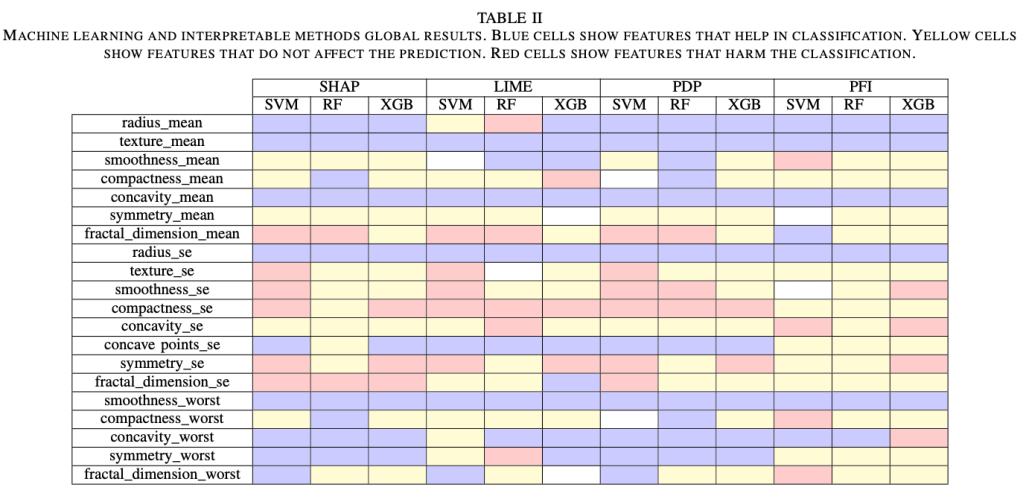
We analyzed a breast cancer database and employed support vector machine, random forest, and extreme gradient boosting to classify the data. Subsequently, we utilized four explainable artificial intelligence techniques to examine the positive, neutral, and negative features of the dataset. The findings of our study suggest that explainable artificial intelligence facilitates the identification of positive features within the dataset that are considered potential hidden risk factors for breast cancer.
These results can significantly contribute to the enhancement and support of cancer-screening strategies.
This research will be presented in International Conference of the Chilean Computer Science Society (SCCC)
 Gaston's personal website